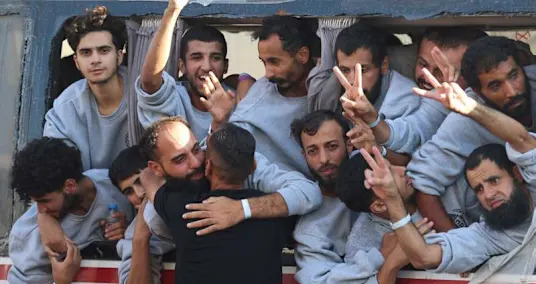
Protesters told The Jerusalem Post that the right to demonstrate in a democracy like Israel was important and that this demonstration was calling for accountability.
A planned protest by Israel’s Sudanese population at the United Arab Emirates embassy was canceled on Thursday, with police reportedly citing fears of disturbing the Israel-UAE relationship.
Protest organizer Anwar Suleiman, 46, a refugee from Sudan who has been in Israel since 2008, was informed by Israel Police that their protest was not to take place on Thursday. Suleiman told The Jerusalem Post that the right to protest in a democracy like Israel was important and that this demonstration was calling for accountability.
“For us, it's very important to demonstrate in front of this embassy because this state supports the militia in Sudan. It supports them financially, through weapons, and even through the media,” Suleiman said. “We want to send a message to this state: you are making terrorism in our country, you’re killing our people in our country. We have to stop this.”
Communication between authorities and protest organizers cites the embassy itself for the cancellation.
“The court decided to halt the demonstration at the request of the United Arab Emirates, claiming that the event could harm the development of relations between the UAE and Israel,” a statement shared by Suleiman from a police representative said.

Israel Police cancel Sudanese protest
Police later informed Suleiman that a planned candlelight vigil for victims of the genocide in Sudan in Tel Aviv’s Levinsky Garden was also to be canceled.
Rights groups say that Israel Police have issued a sweeping ban on all protests related to the matter, blocking even memorial gatherings planned by Sudanese asylum seekers. These actions have drawn sharp condemnation from civil rights advocates, who say the police are overstepping their legal authority in an unprecedented way.
The Jerusalem Post has reached out to Israel Police for comment, but has not yet received a response.
According to the Association for Civil Rights in Israel (ACRI), which represents a group of Sudanese asylum seekers, police officials informed organizers earlier in the day that they would not permit any form of public activity addressing the genocide— including candlelighting ceremonies or speeches honoring victims. Such events typically do not require a police permit.
The nationwide ban follows a High Court petition filed by activists seeking to protest outside the United Arab Emirates Embassy in Herzliya. The petition was withdrawn yesterday after the judges recommended doing so, shortly after the state presented classified material to the court in a closed, one-sided session. The state argued that allowing the demonstration could harm Israel’s foreign relations and national security.
Rather than limiting the restriction to the specific protest, police on Thursday expanded the ban to include all demonstrations “of any kind” relating to the Sudan genocide, throughout the entire country.
ACRI’s legal adviser, Attorney Oded Feller, sharply criticized the move. “The police decision is extraordinarily extreme,” Feller said. “District commanders of the Israel Police, all of them without exception, have abandoned their duty to examine each case individually and to exercise their legal authority. They are acting as an extended arm of the National Security Council and the Foreign Ministry.”
Feller added that no legal basis exists for a blanket prohibition on protests concerning any political or humanitarian topic nationwide, calling the decision a violation of basic rights. “The police are certainly not permitted to ban a memorial event, which does not even require a permit,” he said.
The police have not yet published a formal explanation for the expanded restrictions, which appear to stem from foreign-policy considerations tied to Gulf states with whom Israel has recently strengthened diplomatic ties.
For now, Sudanese asylum seekers say they have been left unable to publicly mourn or speak about atrocities unfolding in their homeland — and rights groups warn the precedent could be used to suppress additional forms of political speech in the future.
latest_posts
- 1
 A Manual for Extravagant Vehicles Available in 2024
 - 2Putin critic gets six years in penal colony, vows hunger strike
- 3Artemis 2 moon rocket gets 'America 250' paint job | Space photo of the day for Dec. 23, 2025
- 4Tata Motors, BMW among automakers set to raise prices in India
- 5Picking the Right Doctor prescribed Medication Inclusion in Senior Protection.




- Progress Over Perfection: Lessons From Garment Factories Fighting Heat Stress
- 6 Fledgling Cameras for 2024: Ideal for New Photographic artists
- 4 astronauts are now on their path to the moon. Here’s what happens next
- Carrefour becomes first European retailer to offer shopping on ChatGPT
- 'A prank': Israel Police detain suspect for shooting rubber bullets at Ashkelon kindergarten
- French Senate debates social media ban for under-15s
- How to watch 'A Charlie Brown Christmas' for less with this Apple TV Black Friday deal
- Why most Jewish Israelis back the death penalty for terrorists
- Woman leaves bachelorette trip after trusting her gut about sketchy men partying it up with friends