The Israeli military has said that Iran’s weapons production capabilities will be largely destroyed "within a few days."
Over the coming days, the military aims to "complete their attacks on all key components of the [Iranian] military industry," army spokesman Effie Defrin told journalists on Saturday evening.
"This means that we will have destroyed most military production capabilities," he added.
"It will take the regime a long time to rebuild them."
Since Israel and the US began to attack Iran four weeks ago, the Israeli Air Force has been carrying out heavy strikes on Iran's military industry.
The Israeli military estimates that it has already struck around 90% of the key facilities in the Iranian arms industry, according to the Times of Israel.
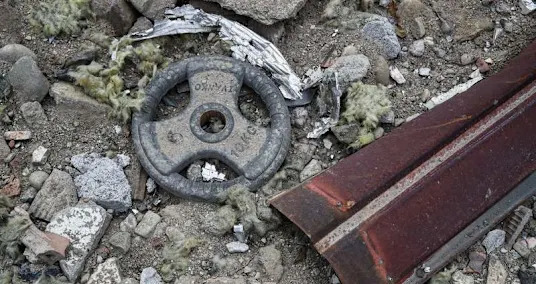
Israeli fighter jets also bombed military production facilities in Iran overnight, including the headquarters of the Marine Industries Organization which is responsible for the development and construction of warships and submarines.
latest_posts
- 1
 Council removes proposal to rename park named after former president of Israel
 - 2Bowen Yang is reportedly leaving 'Saturday Night Live' after this week's episode
- 3'Euphoria' Season 3 trailer includes Eric Dane's final appearance, Jacob Elordi and Sydney Sweeney at the altar and Rue's 'Breaking Bad' era
- 4Vote In favor of Your Favored Treat
- 5Iconic iceberg turns blue, on verge of totally disintegrating, NASA says





- A Russian fighting for Ukraine conned the Kremlin out of $500,000 by faking his own death
- As tetanus vaccination rates decline, doctors worry about rising case numbers
- Astronauts on the ISS watched NASA's historic Artemis 2 launch from space
- Cocoa Prices Settle Lower on Expectations of Adequate Supplies
- Financial plan Cordial Home Redesigns That Add Worth
- California officials warn against foraging wild mushrooms after deadly poisoning outbreak
- Hezbollah rockets hit 165 UNIFIL positions in Lebanon while targeting Israel, IDF reveals
- Find the Advantages of Deep rooted Getting the hang of: Extending Information and Self-awareness
- Holocaust survivor, descendants urge High Court to allow Gaza children medical access