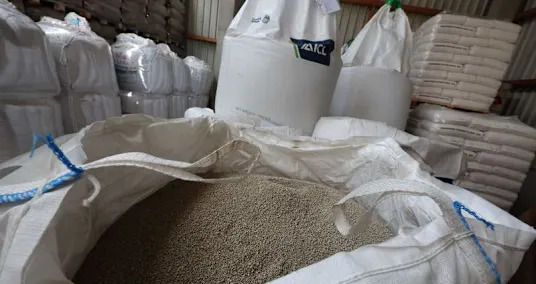

The war in Iran has resulted in a 30-40% spike in the cost of mineral fertilizer since the start of the year, threatening international food prices, according to German experts.
"World market prices for nitrogen fertilizer are increasingly approaching the peak levels we saw at the start of Russia's war against Ukraine [in February 2022]," said Philipp Spinne, managing director of the German Raiffeisen Association (DRV).
In Europe, however, consumers have not yet directly felt the effects because many farmers had already purchased their spring fertilizer before the Iran war began, the Bavarian Farmers' Association told dpa.
But should the war drag on, production costs in Germany and other countries are likely to rise, and with them, producer prices, it warned.
Four years ago, the threat to global food security feared by some experts did not materialize.
This was partly because Russia – a leading fertilizer producer – benefited from the invasion of its neighbour and actually increased its fertilizer exports.
The European Union has since gradually introduced tariff increases on Russian nitrogen fertilizers.
High energy prices are primarily driving the pricing spike, with gas prices accounting for up to 90% of the costs of ammonia and nitrogen production, said Germany's Agrar industry association.
Therefore, if gas becomes more expensive, fertilizer prices automatically rise. But if farmers use less fertilizer, crop yields suffer as a result.
latest_posts




 Misremembering might actually be a sign your memory is working optimally
- 6 Well known Nissan Vehicles in the U.S.
- Watch South Korean startup Innospace attempt its 1st-ever orbital launch today
- Find Wonderful Stream Voyage Objections On the planet
- The Most Rousing Ladies Business visionaries of Today
- 7 Powerful Techniques to Boost Efficiency with Your Cell Phone: A Far reaching Guide
- Europe’s EV Boom Was Real in 2025. The Real Fight Starts In 2026
- Katz to Hezbollah chief Qassem: You won't live to see Israel’s full response to Passover attacks
- Unusual 'ingredients' helped stars form in a galaxy near the Milky Way